

了解您身体内部的运作情况
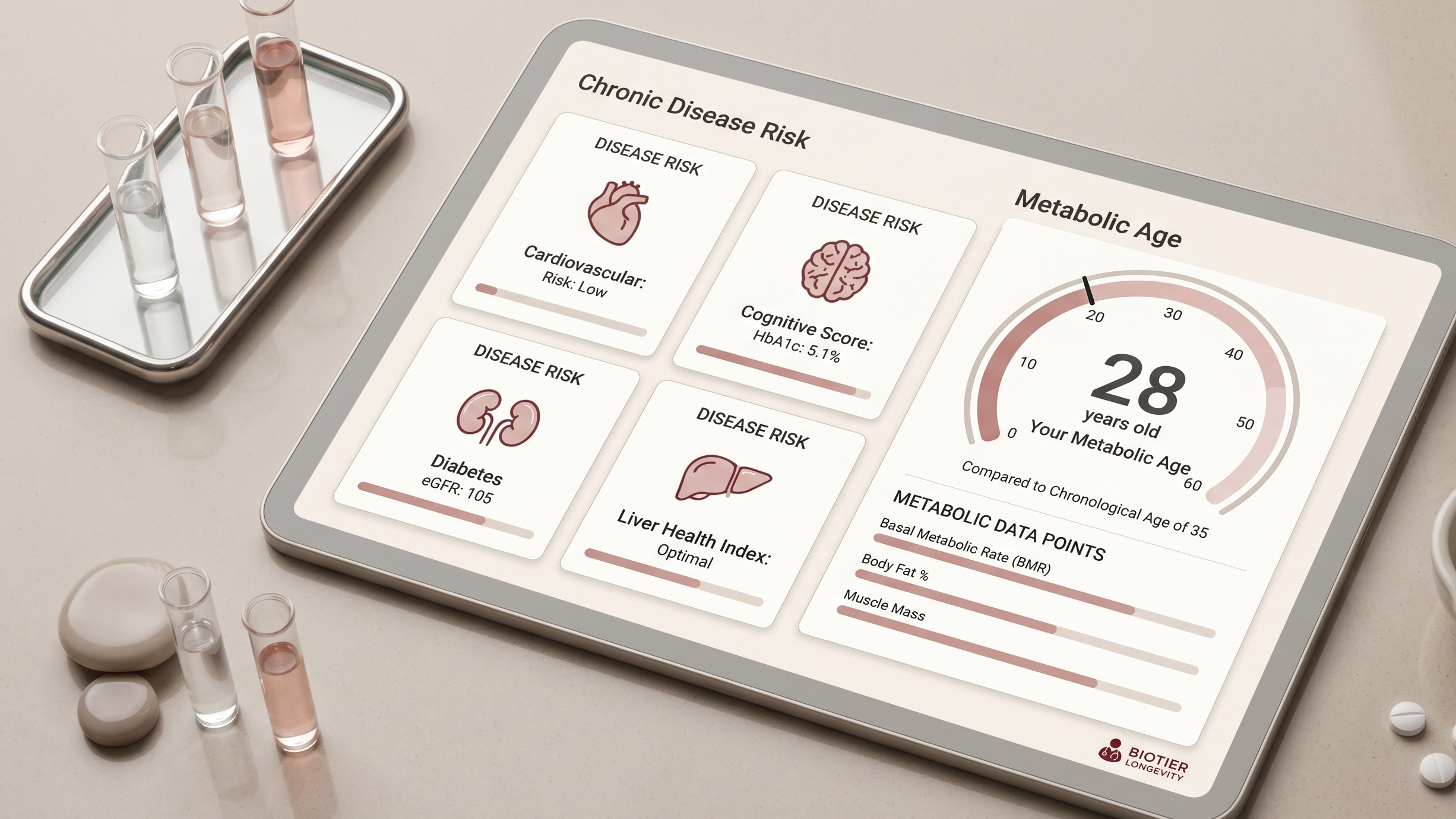
代谢年龄是衡量您的身体功能效率与您的实际生理年龄相比的指标。
代谢年龄高于实际年龄可能表明某些生物过程的运转效率较低,而代谢年龄较低则可能表明代谢健康状况和恢复能力更强。
如何评估
血脂检查测量血液中的胆固醇和甘油三酯水平,包括低密度脂蛋白(“坏”)胆固醇、高密度脂蛋白(“好”)胆固醇和总胆固醇。血脂水平异常是心血管疾病、心脏病发作和中风的主要危险因素。了解您的血脂状况有助于指导饮食、生活方式和医疗干预措施,以保护心脏健康。
肌酐是肌肉产生的废物,由肾脏过滤。测量肌酐水平有助于评估肾脏的功能效率。肌酐水平升高可能表明早期肾脏压力或功能障碍,从而能够及时进行干预,例如生活方式调整、补水和医疗管理。
载脂蛋白A1 (ApoA1) 和载脂蛋白B (ApoB) 是帮助血液中胆固醇运输的蛋白质。ApoA1 与“好”的高密度脂蛋白(HDL)胆固醇相关,而 ApoB 则与“坏”的低密度脂蛋白(LDL)胆固醇相关。这些指标之间的平衡比单独使用标准胆固醇检测能更精确地衡量心血管风险。
脂肪酸在能量代谢、激素产生和炎症调节中起着关键作用。检测脂肪酸谱可以揭示影响心血管健康、代谢功能和炎症水平的失衡。优化脂肪酸平衡可以支持心脏健康、认知功能和整体代谢效率。
Metabolic Age Assessment
The biomarkers included within this assessment provide a unique perspective on the biological processes associated with metabolism and healthy ageing.
Fatty Acids Profile
What It Is Used For
Provides insight into: - Metabolic efficiency - Dietary fat quality and utilisation - Omega-3 and Omega-6 balance - Cardiovascular health - Inflammatory status - Long-term metabolic resilience
Related BioBaseline Assessments
Amino Acids Profile
What It Is Used For
Provides insight into: - Protein metabolism - Muscle health and maintenance - Recovery and repair processes - Nutritional status - Energy metabolism - Cellular function
Related BioBaseline Assessments
Glycoprotein Acetyls (GlycA)
What It Is Used For
Provides insight into: - Chronic systemic inflammation - Cardiometabolic health - Biological stress - Long-term disease risk - Physiological resilience
Related BioBaseline Assessments
评估您的代谢年龄
更早预知。更明智地行动。
一项由医生指导的评估,结合了关键疾病风险标志物和代谢健康洞察,旨在帮助您了解当前的健康状况和未来趋势。