

Age Is More Than A Number
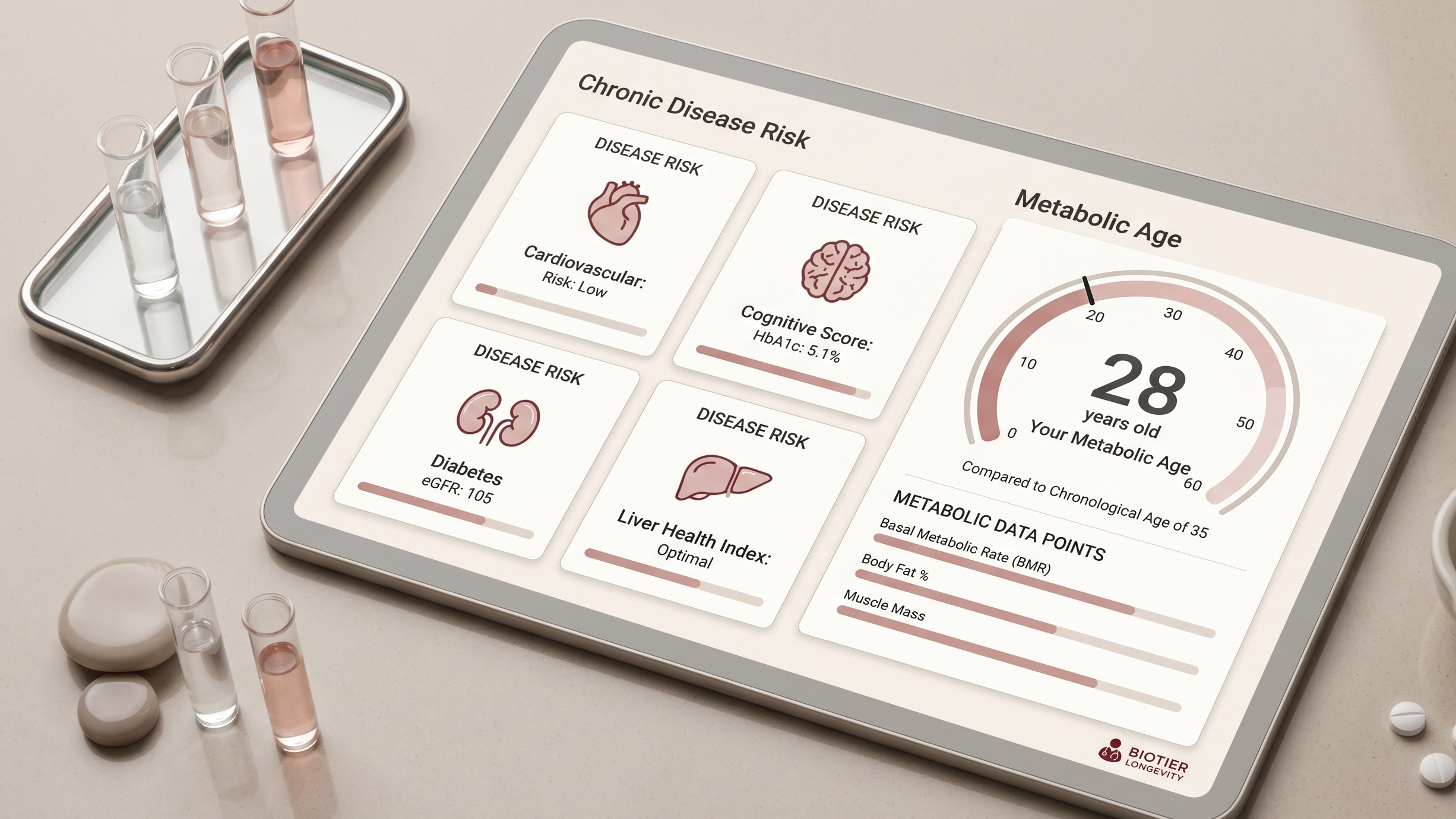
Metabolic age is an estimate of how efficiently your body is functioning compared to your actual chronological age.
The Metabolic Age Assessment evaluates advanced biomarkers associated with metabolism, inflammation, nutrient utilisation, and physiological resilience—providing deeper insight into the biological processes that may influence how your body ages over time.
What We Assess
How effectively the body processes and utilises nutrients for energy production and physiological function.
Biomarkers associated with chronic low-grade inflammation and biological stress.
Markers that provide insight into how the body processes fats, proteins, and key nutrients.
Factors associated with cellular health, recovery, and overall physiological function.
Metabolic Age Assessment
The biomarkers included within this assessment provide a unique perspective on the biological processes associated with metabolism and healthy ageing.
Fatty Acids Profile
What It Is Used For
Provides insight into: - Metabolic efficiency - Dietary fat quality and utilisation - Omega-3 and Omega-6 balance - Cardiovascular health - Inflammatory status - Long-term metabolic resilience
Related BioBaseline Assessments
Amino Acids Profile
What It Is Used For
Provides insight into: - Protein metabolism - Muscle health and maintenance - Recovery and repair processes - Nutritional status - Energy metabolism - Cellular function
Related BioBaseline Assessments
Glycoprotein Acetyls (GlycA)
What It Is Used For
Provides insight into: - Chronic systemic inflammation - Cardiometabolic health - Biological stress - Long-term disease risk - Physiological resilience
Related BioBaseline Assessments
Assess Your Metabolic Age
Know sooner. Act smarter.
A physician-guided assessment combining key disease risk markers with metabolic health insights designed to help you understand your current health and where it’s heading.